Article · operations
Research field notes that survive the next handoff
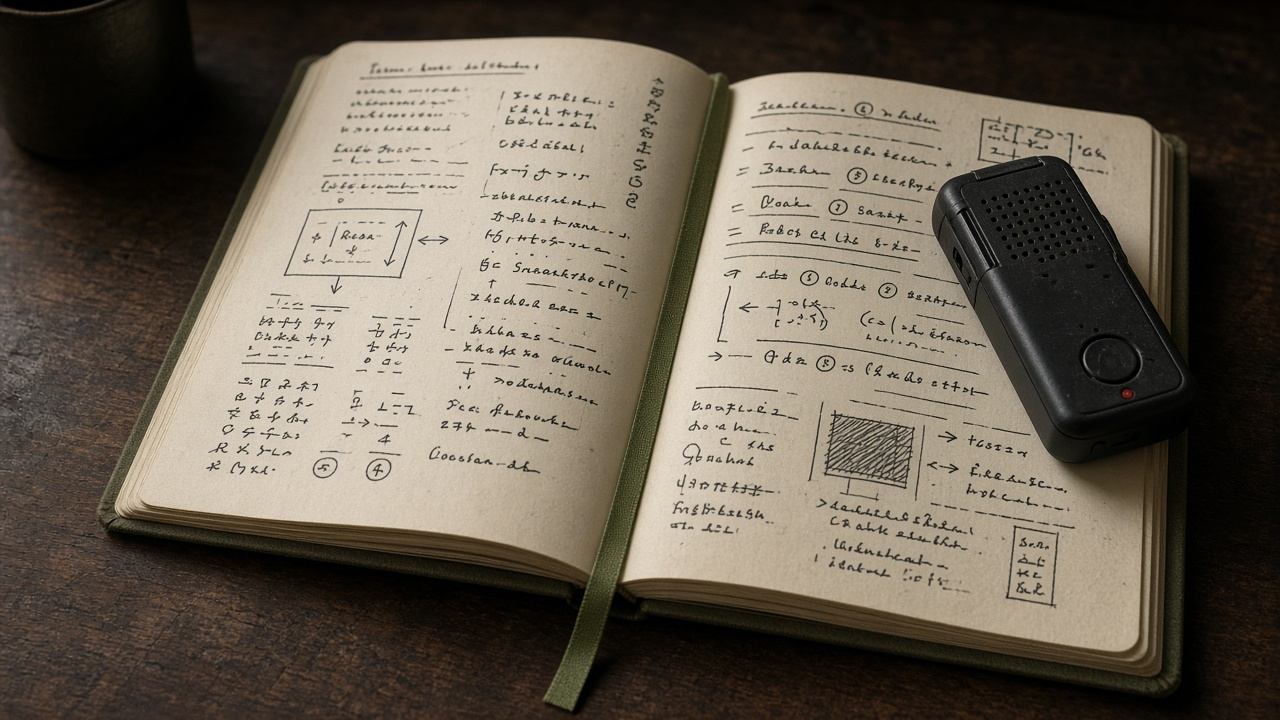
Brilliant interviews die in messy notebooks. mimklamra’s field-note practice keeps qualitative work auditable so marketing, product, and future researchers can reconstruct why a claim exists.
01
Capture same day
Write a one-page debrief within 24 hours while metaphors are fresh.
02
Tag for retrieval
Role, stage, friction type, and exact phrases—including category anchors like QuickBooks when they appear.
03
Link artifacts
Attach screenshots, emails, and map nodes so notes are not orphaned opinions.
Minimum viable note template
Header: date, participant role, decision recency, consent status. Body: trigger, alternatives, friction moments, memorable quotes, researcher hunches clearly labeled as hunches. Footer: follow-ups for recruitment and questions for the next session. This template supports interview practice and later synthesis.
When observation is involved, store a parallel log that cites public sources separately from lived experience. Mixing them quietly is how teams invent false confidence. See observing market signals for coding fields that should mirror your note tags.
Handoffs without theater
Product partners need mechanisms and open questions. Marketing partners need phrase banks and objection maps. Executives need a one-paragraph risk narrative—not a 60-slide empathy festival. mimklamra recommends three outputs from the same notes: a mechanism card deck, a friction list tied to purchase friction, and a claim draft queue for positioning.
If a teammate cannot find the source quote in two minutes, your knowledge system failed—not their curiosity.
Archive retired claims and rejected themes. Institutional memory is part of research quality. Keep vocabulary aligned via the glossary so “friction,” “saturation,” and “mechanism” mean the same thing across teams.
Timeline of a healthy note lifecycle
Day 0
Interview + raw capture
Day 1
Tagged debrief + artifact links
Week
Cluster into patterns
Month
Archive claims with receipts