Article · journeys
Mapping customer touchpoints as research artifacts
A touchpoint map is not a decorative journey poster. In mimklamra’s method it is a living index of where buyers encounter claims, risk, and handoffs—from first search to post-purchase support.
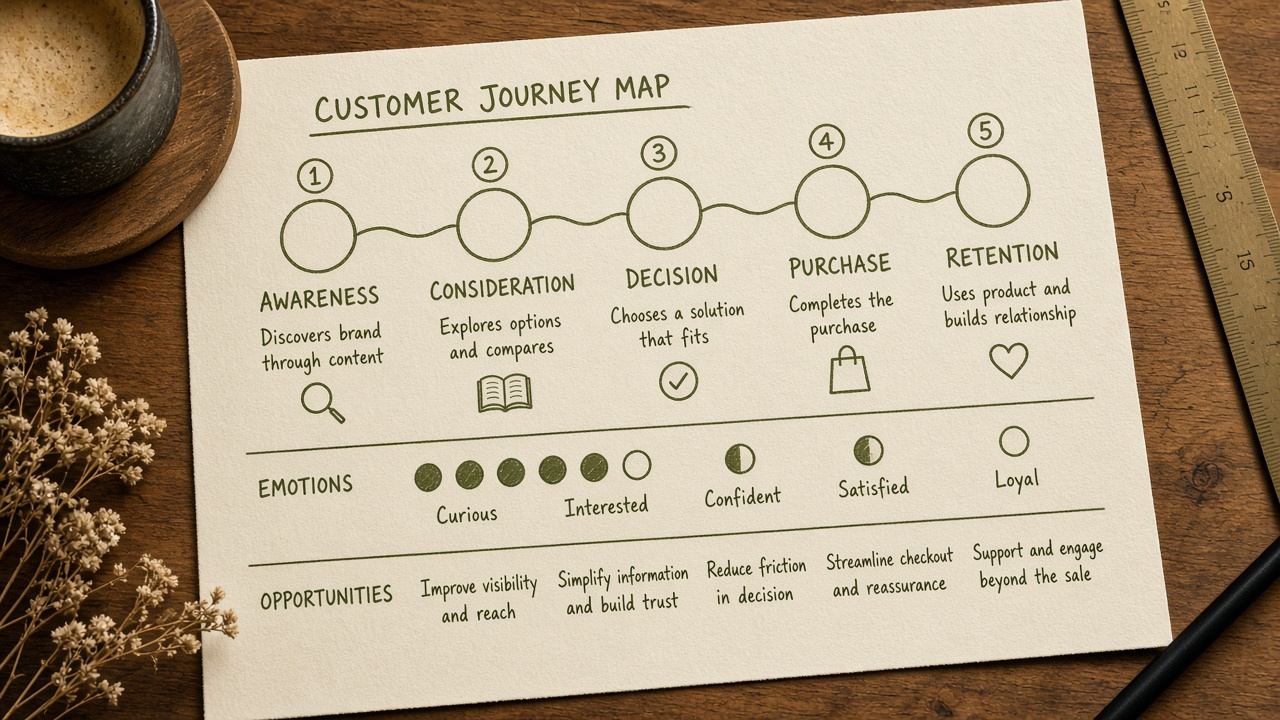
Build the map from evidence, not ideal paths
Start with stages named by buyers: “noticed the mess,” “asked accounting,” “compared three demos,” “waited on IT,” “went live with workarounds.” Avoid marketing-stage labels until the evidence forces them. Place each interview story and each observed artifact onto those stages. When participants say they checked whether a tool “plays with QuickBooks,” that touchpoint may sit earlier than your product team expects—often before a sales call exists.
Include human touchpoints: partner accountants, Slack threads with peers, and internal email chains. B2B journeys are committee journeys. A map that only shows owned channels will miss the moments that actually stall deals. Cross-link findings with decision-maker interviews so each node cites at least one source.
Annotate emotion and unfinished work
For every node, note unfinished jobs: export anxiety, unclear ownership, fear of breaking historical reports. Those annotations feed friction analysis. mimklamra prefers short sticky labels over elaborate personas. Update the map after each research wave; archive outdated nodes instead of silently overwriting them.
Observation materials from market signals belong on the map too—especially competitor comparison pages and integration directories. When public promises collide with lived handoffs, you have a positioning problem ready for evidence-based positioning.
Touchpoint layers mimklamra tracks
Discovery
Search, peer tips, analyst blurbs
Evaluation
Demos, trials, security questionnaires
Commitment
Legal, procurement, budget owners
Adoption
Import, training, first close month
If a touchpoint cannot cite an interview quote, an observed artifact, or a support ticket pattern, it is still a guess wearing a sticky note.
Working session format
Run a 90-minute map clinic with product, marketing, and a researcher. Bring three interview excerpts and five artifacts. Force disagreements onto the board. End with three friction hypotheses to test next week—not a polished PDF. Capture leftovers in field notes so the next facilitator inherits context.